A Child Who Learned on Junyi Twelve Years Ago Is Now My Colleague
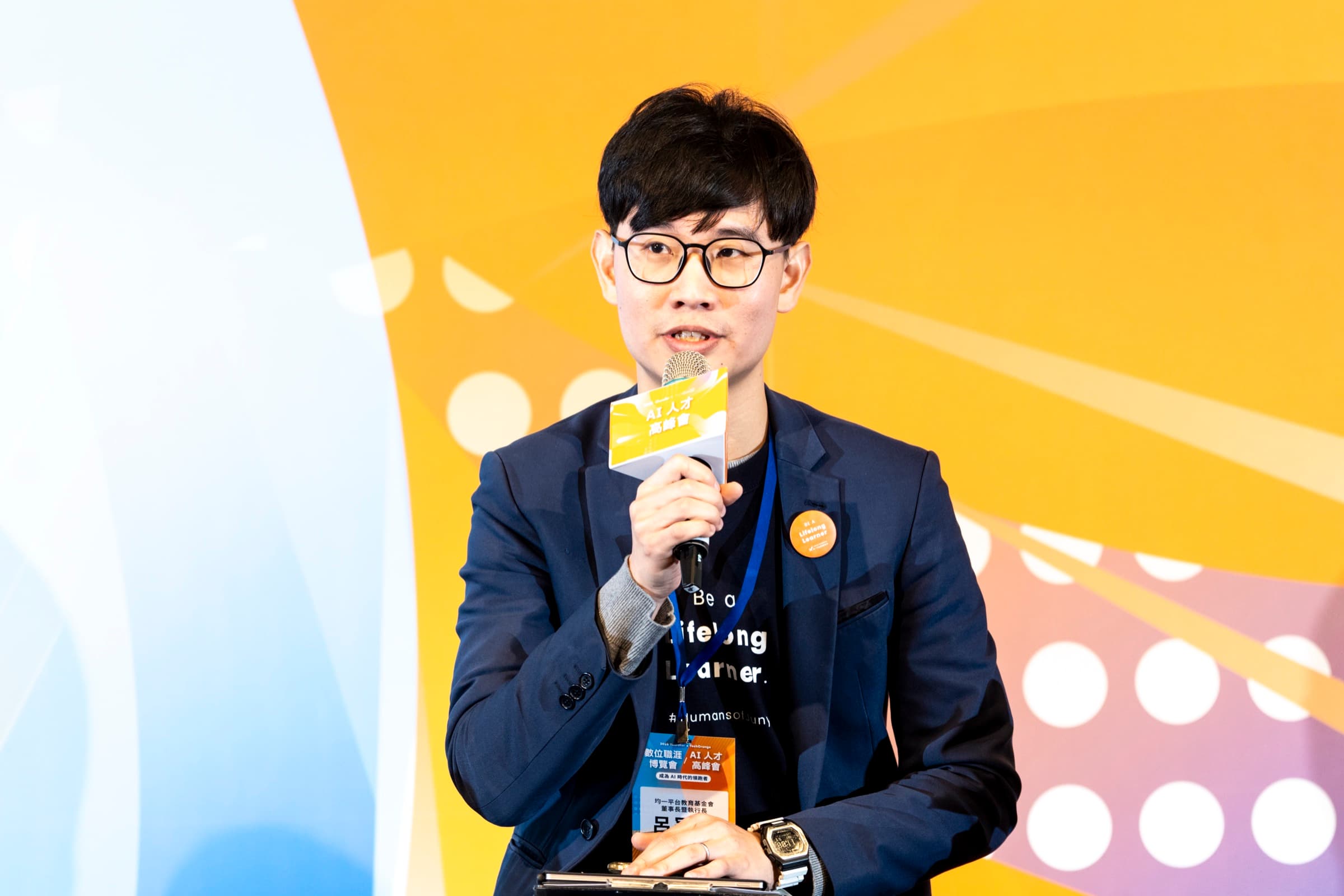
[A Child Who Learned on Junyi Academy Twelve Years Ago Is Now My Colleague]
In Hao-Tien’s Junyi account there are two badges that read: “Completed 145 months ago.”
That is more than twelve years.
A child who was learning on Junyi back then has now joined us, to study together how AI can help more children truly learn.
Today I want to introduce this young colleague: Lu Hao-Tien (呂顥天), 18 years old, who graduated this year from Taipei Digital Experimental High School (數位實中). He is now a first-year student in the Department of Life Sciences at National Yang Ming Chiao Tung University (NYCU), and also a “Frontier Education AI Research Engineer” at the Junyi Academy Foundation.
Some people may already know him from the media, and may have seen the label “genius.” But what I want to share more is the initiative and hard work I have seen with my own eyes over these years.
I have known Hao-Tien since his third year of junior high, when we talked through the choice of entering Taipei Digital Experimental High School. Now that we are colleagues, I have even more chances to see how he turns curiosity into the action of continuous learning and hands-on work.
In elementary school, he was already writing to professors on his own initiative to win the chance to walk into university classrooms. Later he took part in research at National Taiwan University and Academia Sinica, and built up practical experience at technology companies such as Appier.
On one side, he goes into the lab, reads papers and works through theory; on the other, he develops systems, takes part in product work, and even practices business negotiation. All the while, he is still a student who has to keep up with his schoolwork.
What impresses me deeply is how he keeps connecting research and practice: what he learns, he takes and tries out; the problems he runs into in practice, he brings back to study.
Working with him, I often forget that he is only eighteen.
So what does a “Frontier Education AI Research Engineer” actually do?
The job ties together brain science, education and AI technology. One question we care about is:
After AI helps a child finish the homework, what ability is the child left with?
So we study when AI should offer help, when it should let the child try thinking first, and whether the child can still solve problems independently once the AI is taken away. This is also an important direction in how we talk about “cognitive security” in educational settings.
Last month, a paper we co-wrote was accepted by CogSec, the cognitive security workshop at ACM HCOMP/CI 2026, and will be presented at the workshop, to be held near Washington, D.C., in the United States at the end of September.
Seeing the names on the paper, and then looking at those two badges marked “Completed 145 months ago,” I am deeply moved.
Junyi was once part of his learning journey. Today, he has also become a partner in creating learning opportunities for more children.
This is a Junyi story we treasure and look forward to seeing: a child, through self-directed learning, gradually grows abilities of his own, and then uses those abilities to help others.
Next Tuesday, September 22, Hao-Tien has been invited to take part in “Toward the New AI Era: A Cross-Generational Dialogue Forum on the Future,” held at National Taiwan University by the Yu Chi-Chung Cultural and Educational Foundation (余紀忠文教基金會). Together with partners from different generations, including Tei-Wei Kuo (郭大維), chief technology officer of Delta Electronics and former interim president of National Taiwan University, he will discuss talent and the future in the AI era.
Having just sat with him through his rehearsal today, I look forward even more to everyone hearing his thinking in person.
If you care about how children learn, how young people find their own path, or what kind of talent the AI era needs, you are invited to come.
Tuesday, September 22, 13:30–17:00
Zhengda International Conference Hall (正大國際會議廳), B1, Building 1, College of Management, National Taiwan University
Admission is free. The registration link is in the comments.
- Original: Ray Lu’s personal Facebook post (published 2026-09-18)
Course titles follow the source. Check each course page for its teaching language.
AI Fluency: Framework and foundations
Practice delegation, description, discernment, and diligence with the 4D framework. Free course; completion badge after assessment.
Dissecting the Crawfish: How AI Agents Work, via OpenClaw
An OpenClaw-based introduction to how AI agents work. Free public lecture; no self-study certificate. Costs of independently using external models or tools are separate.