Powerful AI Is Not the Same as AI That Makes People Stronger
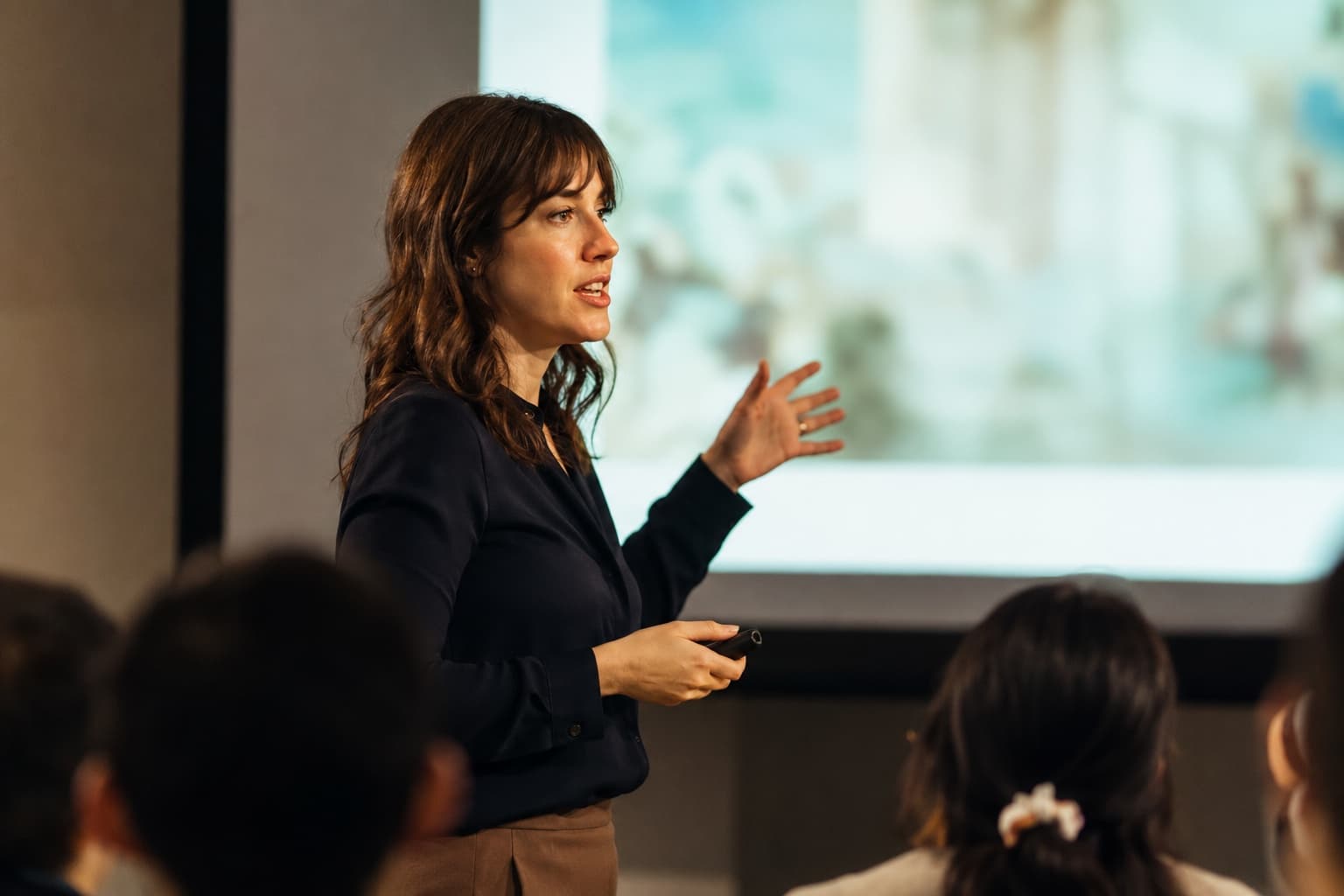 Illustration · not a service record
Powerful AI is not the same as AI that makes people stronger
The former does the work for you; the latter builds your own abilities.
Last week, MIT President Sally Kornbluth wrote a letter to the whole university, describing the impact of generative AI on education and research as a watershed for MIT, and for higher education as a whole.
Attached to the letter was the final report of an ad hoc committee. The report’s findings are blunt: AI can now credibly complete most undergraduate assignments, and the foundational experiences of learning, such as study groups, office hours and undergraduate research, are being upended.
MIT’s response is not a ban. It is to redesign assessment, return to hands-on learning, and require every course to spell out its rules for using AI. In her letter she reminds readers that MIT was founded to help people develop their own capacity for discovery, problem-solving and invention, and that this will never change. MIT therefore has a responsibility to let students know when to use AI, and when not to use it at all.
A university that was deeply involved in the birth of AI has chosen, at the moment AI is at its strongest, to turn back and ask: What is the essence of education?
(Related article: MIT President Sally Kornbluth: AI and education — A watershed moment for MIT)
It is not only MIT.
Over the past month, I have noticed that some friends of mine who had been learning and using AI with great fervor have, if anything, slowed down.
It is not that they have stopped using AI. They have started to ask, more seriously:
For this task, when should I use AI? And when should I not be so quick to use it?
I do not think this means the AI fever is cooling. I think people are beginning to mature.
Faced with a technology that truly changes cognitive work, we probably all go through “seeing the mountain as a mountain, seeing that the mountain is not a mountain, and seeing the mountain as a mountain once again”: first we are stunned by what it can do, then we see the dependence and the cost, and only at the end do we learn to use it consciously.
AI is a special case. Earlier technologies extended human physical strength, memory and calculation; AI has begun to step directly into reading, writing, reasoning, judgment and creation.
So when we first use AI heavily, it is easy to get the feeling that “I have suddenly become really good.” It can help us produce:
A literature review that spans many fields
An impressive pitch deck
A diagram of a framework that used to be hard to visualize
An agent that never tires and can keep working by trial and error
But gradually, a more important question emerges:
Am I making AI stronger, or is AI making me stronger?
The former means that I keep feeding AI my context, data, questions, instructions and know-how, so that it understands me better and can do more work on my behalf.
The latter is about whether, after using AI, I myself have become better at asking questions, better at reading and expressing myself, better at verifying and judging, and more capable of critical thinking, empathy and creation.
Stronger output does not mean a stronger person.
We can even use two questions to check every collaboration with AI:
Once AI is switched off, what ability am I left with? Once AI is switched on, am I steering it, or is it steering me?
This distinction is also starting to find support in research.
A 2025 experiment on learning math with GPT-4, involving nearly a thousand senior high school students, found that students who used ordinary GPT-4 improved their performance during practice by 48%; but once the AI was taken away, their performance on a test taken on their own was 17% lower than that of students who had not used AI.
But another group of students used an AI “with teaching guardrails,” for example one that did not give complete answers directly and that built in guidance designed by teachers. Their practice performance improved even more, and the negative effect after the AI was taken away largely disappeared.
Another randomized experiment, in a university physics course, also found that an AI tutor designed according to learning science can bring significantly higher learning gains.
Both point to one important thing:
What determines the educational effect is not only how strong the model is, but whether we design it to be “someone who answers for you” or “a coach.”
(Related articles: PNAS: Generative AI Can Harm Learning; Scientific Reports: AI tutoring and learning gains)
This is also why education technology companies such as Khan Academy, Coursera and Duolingo do not simply connect students to the strongest LLM.
Khanmigo emphasizes Socratic questioning; Coursera Coach confines AI to a trusted course context; Duolingo uses level control, scenario design and interaction flows to keep generative AI within the goals of language learning.
Good education AI is not just better at answering questions; it knows better when it should not answer directly.
And as AI grows stronger, this will become more important, not less.
Bill Gates recently raised a question that the education world should face seriously: the same AI can lead people to learn more, or to learn less; the key is whether we preserve the productive struggle that learning truly requires, the necessary cognitive effort. He also argues that the direction of AI’s development cannot be decided by technology companies alone; educators, governments and society must all take part.
(Related article: Bill Gates: A turbulent AI era and the critical choices ahead)
To Use AI Well, First Understand the Brain
The studies above in fact share one underlying scientific theme, cognitive offloading: when we hand over to external tools the things the brain used to do, such as remembering, calculating and reasoning, what changes take place in the brain?
In recent years we have put a great deal of effort into learning AI Literacy: how to ask, how to use, how to manage, how to create.
But if we want to use the brain well, isn’t there another course we need to make up even more: Brain Literacy?
At the very least we should know this: memory is not a hard drive, and every retrieval reshapes it; making a mistake is not failure, and prediction error is precisely the signal the brain uses to update itself; so an answer that comes too fast often amounts to taking the learning away.
I studied a little neuroscience in medical school, just enough to read and understand these studies, and just enough to admit that our understanding of the brain falls far behind the speed at which we are sending AI into classrooms.
Riding the crest of a wave, the education world easily says things that are trendy but have no scientific basis. Brain Literacy is the anchor that moors us back to the evidence.
So This Week I Am in Frankfurt
As I write this article, I am in Frankfurt, Germany, attending the Ernst Strüngmann Forum. The theme of this closed-door forum, translated literally, is memory, learning and neural adaptation in the age of cognitive offloading.
Five days, no keynote speeches, only discussion. Nearly fifty neuroscientists, cognitive scientists, learning scientists and education technology practitioners are shut in together to work; the chairs are Barbara Oakley, author of Learning How to Learn and A Mind for Numbers, and Terrence Sejnowski, a pioneer of computational neuroscience. Thanks to an introduction from Professor Ken-Zen Chen (陳鏗任) of NYCU, I have the opportunity to take part by invitation as a Discussant.
My reason for coming is simple: lay the foundation before building the house. Before discussing how Taiwan should go about education AI, get clearer about “how the brain learns.”
Take the questions from the field in Taiwan there, and bring the world’s science back.
An in-depth gathering devoted to bringing together brain scientists, psychologists and education technology practitioners, with discussion only and no speeches
A Stronger Brain Happens to Be Spelled B・R・AI・N
Before I set out, I prepared a yardstick for myself, and I also plan to take it into the meeting and test it.
The English word for “brain” is a wonderful one: BRAIN already has AI embedded in the middle. And if you spread the whole word out and read it, it happens to form a complete sentence:
Better Reasoning, AI or Not.
Better reasoning — with AI or without AI, we need it either way.
This sentence has two layers of meaning.
With AI: having used AI, have my questioning, verification and judgment really improved? Or has only the output become prettier? This is “steering, or being steered.”
Without AI: take the AI away, and is the ability still there? This is “once AI is switched off, what am I left with.” The −17% mentioned earlier measures exactly this half.
And for “when to use AI and when not to,” the criterion has never been whether it is fast or whether it is flashy, but:
Which choice will make my reasoning better?
When MIT’s president says students must be taught “when not to use it at all,” this is also the yardstick that is needed.
Those friends of mine who slowed down in fact already have this yardstick in their minds.
AI can sit inside the brain — but in front of it is human reasoning, and behind it is human independence.
This is the way of using AI that is truly good for the brain.
An Answer Taiwan Can Give the World
So here is what I think:
Powerful AI and AI that makes you stronger are two different things.
The former does the work for you. The latter builds your own abilities.
At the individual level, we can use this yardstick to check every collaboration with AI; but at the system level, “AI that makes people stronger” will not grow by itself. Someone has to turn this yardstick into public infrastructure.
And this may be exactly the world-class contribution that educators can make to the AI era.
Taiwan may not necessarily have to compete with the world over who can train the largest foundation model.
But Taiwan has both deep technological capability and the wisdom of classrooms and teachers built up over many years (along with learning science and brain science, which are also very important). Perhaps we can combine these things to answer a different question:
As all the models grow stronger and stronger, who will define what counts as “good education AI”?
Perhaps we can begin to build a public infrastructure for education AI that is model-agnostic, not tied to OpenAI, Google, Anthropic or any single model:
TW-Data | The Teacher’s Way Dataset (師道資料集)
Teaching Wisdom Dataset
Turn the way good teachers ask follow-up questions, give hints, wait, diagnose misconceptions and encourage students into teaching wisdom that AI can learn from; that is, the judgment inside a teacher’s brain about “when to let students think first, and when to finally give a hint.”
TW-Bench | The Teacher’s Wisdom Benchmark (師慧基準)
Teaching Wisdom Benchmark
It does not only test whether the AI’s answers are right. It tests:
After using AI, has the person really become stronger?
Especially whether the ability remains after the AI is taken away.
(What TW-Bench sets out to measure is that very sentence: Better Reasoning, AI or Not.)
TW-Guard | The Teacher’s Guardrails (師守護欄)
Teaching Wisdom Guardrails
So that whenever any model enters an educational setting, the necessary cognitive effort, age-appropriateness, privacy, safety, academic integrity and the teacher’s leading role can all be safeguarded.
(What it safeguards are the conditions that allow that sentence to hold.)
TW can stand for Teaching Wisdom.
It can also stand for Taiwan.
Powerful AI will become more and more plentiful, and cheaper and cheaper.
But AI that makes people stronger will not appear automatically.
It needs teachers, learning scientists, engineers, students and NPOs to define it, test it and safeguard it together —
to safeguard every brain, so that with AI or without AI, it can reason better.
This may be what education truly ought to do in the AI era, and so it may need to be done through the combined strength of different professions:
Not only bringing AI into education, but bringing education into AI.
___________
Note: The full original text was written by the author, then cross-checked and edited with Claude / GPT.
- Original: Ray Lu’s personal Facebook post (published 2026-08-31)
Course titles follow the source. Check each course page for its teaching language.
Dissecting the Crawfish: How AI Agents Work, via OpenClaw
An OpenClaw-based introduction to how AI agents work. Free public lecture; no self-study certificate. Costs of independently using external models or tools are separate.
Introduction to Model Context Protocol
Build MCP servers and clients with Python tools, resources, and prompts. Python/async familiarity required; connected model API usage may incur charges.