Who Asked These 4,000 Questions?
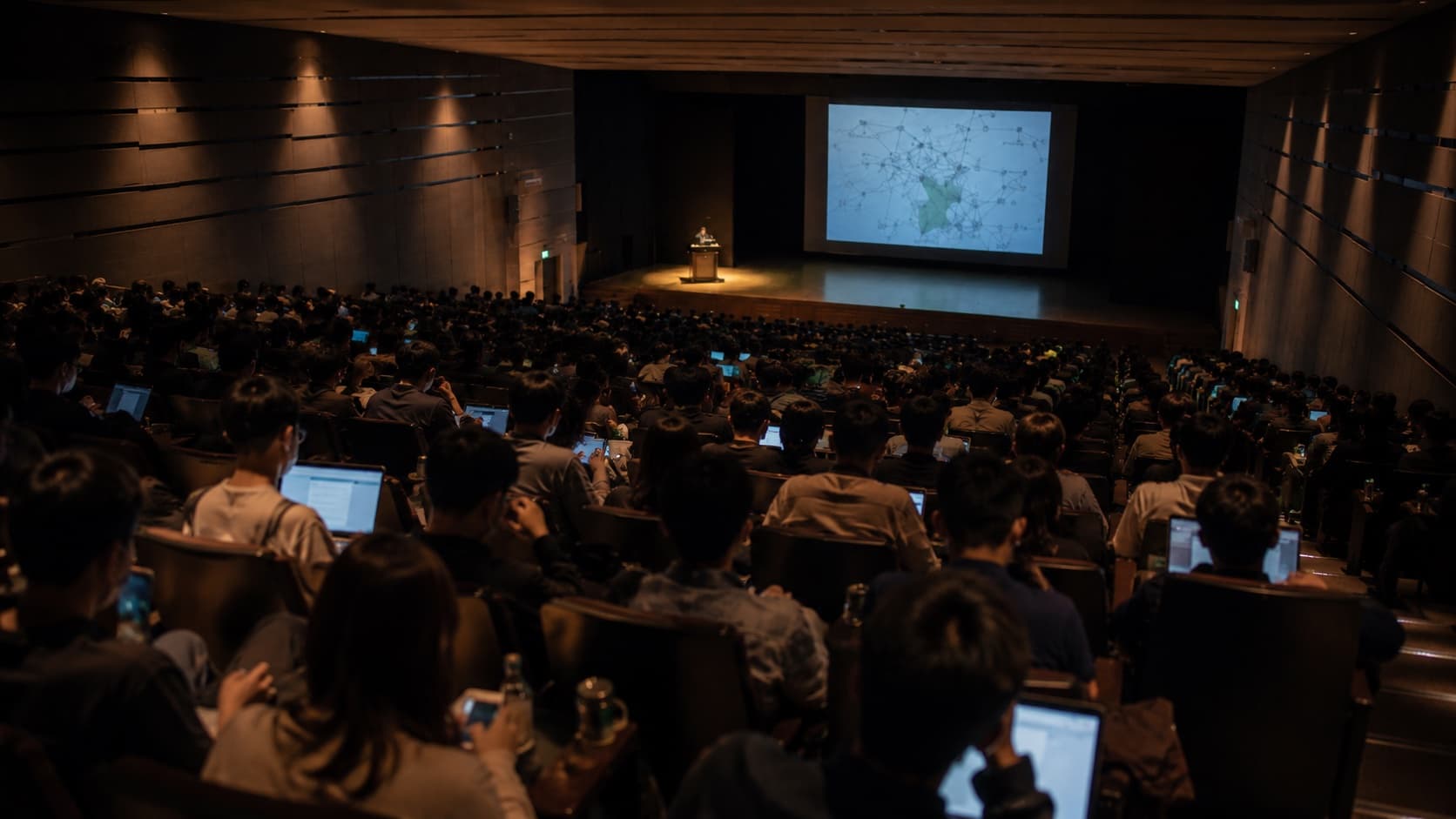 Illustration · not a service record
AI took on 4,000 hard math problems and turned in 722 manuscripts.
But I keep wondering: who asked these 4,000 questions?
On October 6, OpenAI released a batch of math manuscripts on GitHub. Using a model not yet open to the public, they took on about 4,000 research problems that mathematicians had not yet solved, and in the end put together 372 sets of results and 722 manuscripts. On average, each result used roughly the compute of ChatGPT Pro thinking for 3 hours.
Three hours is about the time a junior high school student spends on an evening of math homework (if there is no phone scrolling in between). In those 3 hours, AI turns in research-level proofs.
Producing a proof is becoming very cheap.
The next day, someone online was already writing it up as “AI cracks the Riemann Hypothesis.”
Click through to the original material, and what it actually proved is the “quasi-Riemann hypothesis.” To put it in classroom terms:
The Riemann Hypothesis says: “Everyone in the class is sitting in the row right in the middle.”
The result this time is: “The row by the window is definitely empty.” (They have probably all gone to the school store.)
From “no one by the window” to “everyone sits in the middle” is still a long way. So the headline said too much.
But if that makes you think “more hype,” that is not right either. Just to prove “no one by the window,” mathematicians have been thinking for more than a hundred years. And this particular manuscript happens to be among the 162 of the 722 that come with a Lean formal proof. A Lean formal proof is a version that a computer can check line by line.
Of course, the whole batch of manuscripts has not yet been formally reviewed by other mathematicians. OpenAI itself also wrote that results not yet formalized may have problems.
So reading this piece of news is not a matter of believing all of it or none of it, but of first seeing clearly “what it actually said.” That in itself is an exercise in mathematics.
A group of mathematicians has formed an independent panel, AGMAI, whose members include three Fields Medal winners and whose purpose is to advise AI companies. They said this release is “the beginning, not the completion” of humanity’s understanding of these results. They also gave a reminder: mathematicians must be able to pose their own questions.
Back to the question at the start. These 4,000 problems were not thought up by AI. They were asked by human mathematicians, who still could not answer them. Some have sat for a few years, some for more than a hundred. Riemann’s was asked back in 1859.
AI is getting better and better at answering. But the questions are still asked by people.
So when a child asks: “AI can already solve it all, so why do I still have to learn math?”
My answer is: you do, and all the more so. Only the emphasis has changed. Answers are getting cheaper and cheaper; good questions are getting more and more expensive.
I have seen this in Junyi Academy’s own data too.
Our AI Notebook deliberately does not give the answer directly; instead it asks the child questions back, step by step. In the year and more since it launched, more than 63,000 people have used it. But the data is also honest: looking at September alone, nearly 70 percent of the messages children sent were taps on question buttons we had prepared in advance, and only about 30 percent were questions they typed themselves.
The good news is that once children start asking, they keep asking. For every opening question they tap, they go on to ask two more follow-up questions on average.
The hard part is the first question. Elementary school children typing slowly is one reason, but I think it also shows that asking a question of your own takes practice in the first place.
And it can be practiced.
This March, two sixth-grade classes at Longpu Elementary School (龍埔國小) in New Taipei had a math lesson. In one class, the teacher first demonstrated how to ask, then let the children decide for themselves what to ask the AI; in the other, the children worked in groups and made sure they understood the problem before asking. Over one lesson, 60 children asked more than 600 questions. One of the children asked:
“If two people walk different routes, can you still compare who is faster?”
This is not a problem from the textbook. It is a question that grew out of the child. The difference lies not in the AI but in the adults beside them, who treated “how to ask” as something worth teaching.
So to the moms and dads who sit with their children over math homework every day, I want to say: you don’t have to know how to do every problem, but you can be the one who demonstrates. Try these three lines tonight:
1. How did you come up with this answer?
2. How can you be sure it is right?
3. Was there any problem today that you wanted to ask about but didn’t?
The third is the hardest, and the most important.
AI can take on 4,000 problems. But question 4,001 has to be asked by someone first.
I hope that someone will be our children.
Has your child ever asked, “AI can do it all, so why do I still have to learn?” How did you answer? Let’s talk in the comments.
The original sources are in the first comment
- Original: Ray Lu’s personal Facebook post (published 2026-10-08)
Course titles follow the source. Check each course page for its teaching language.
AI Boost Bites: Amplify Exec Voices with AI
Free no-credit 10-minute micro-course using Gemini Gems, writing samples, and clear instructions to draft in an executive's voice. A focused workplace example, not a comprehensive prompting course.
AI Fluency: Framework and foundations
Practice delegation, description, discernment, and diligence with the 4D framework. Free course; completion badge after assessment.